
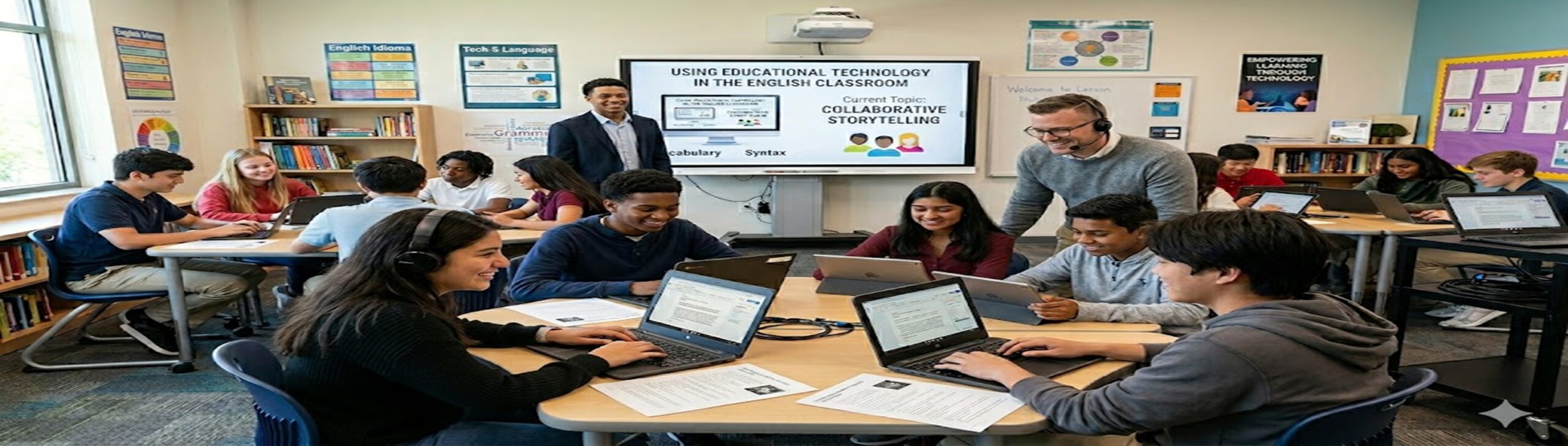

Using Educational Technology in the English Language Classroom
Introduction
Educational technology has transformed the way teachers teach and students learn. In the English language classroom, technology offers powerful tools that support communication, creativity, and collaboration. Teachers now use digital platforms to teach reading, writing, listening, speaking, vocabulary, and grammar in more engaging and effective ways. This article explains how teachers can use educational technology in English language teaching. It highlights practical strategies, tools, and benefits while maintaining a clear and active approach.
The Role of Educational Technology in Language Learning
Educational technology plays a central role in modern classrooms. It allows teachers to present content in interactive formats. Students can access materials anytime and practice skills at their own pace. Teachers can also track progress and provide instant feedback.
Technology supports different learning styles. Visual learners benefit from videos and presentations. Auditory learners improve through podcasts and recordings. Kinesthetic learners engage with interactive activities and simulations. By using technology, teachers can address the needs of all learners.
Benefits of Using Technology in the English Classroom
Teachers achieve several benefits when they integrate technology into their lessons.
Improved Student Engagement
Technology captures students’ attention. Interactive tools such as quizzes, games, and videos make lessons interesting. Students participate actively instead of passively listening.
Better Communication Skills
Digital platforms encourage students to communicate. They write emails, join discussions, and record speeches. These activities improve their language skills in real contexts.
Access to Authentic Materials
Teachers can provide real-world content such as news articles, videos, and podcasts. Students learn how language works in everyday situations.
Personalized Learning
Technology allows teachers to adjust content based on student needs. Students can learn at their own pace and revisit difficult topics.
Immediate Feedback
Online tools give instant feedback. Students can correct their mistakes and improve quickly.
Integrating Technology into Lesson Planning
Teachers must plan carefully before using technology. They should align tools with learning objectives. Technology should support the lesson, not distract from it.
Set Clear Objectives
Teachers should define what students need to learn. For example, they may aim to improve speaking fluency or writing accuracy.
Choose the Right Tools
Teachers should select tools that match the objective. For example, they can use video tools for speaking practice or writing platforms for essays.
Plan Activities
Teachers should design activities that use technology effectively. Each activity should have a clear purpose and outcome.
Evaluate Effectiveness
Teachers should assess whether the technology helped students learn. They can collect feedback and adjust future lessons.
Teaching Reading with Technology
Teachers can use digital tools to improve reading skills.
Online Articles and E-books
Students can read digital texts on various topics. Teachers can assign reading tasks and ask comprehension questions.
Annotation Tools
Students can highlight important points and add notes. This process helps them understand the text better.
Interactive Reading Platforms
Teachers can use platforms that include quizzes and exercises. These tools check comprehension and reinforce learning.
Strategies for Teaching Reading
- Teachers should select age-appropriate texts.
- Teachers should guide students to identify main ideas.
- Teachers should encourage discussion after reading.
Teaching Writing with Technology
Technology enhances writing instruction in many ways.
Word Processing Tools
Students can write essays and edit their work easily. They can check grammar and spelling using built-in tools.
Collaborative Writing Platforms
Students can work together on documents. They can share ideas and give feedback.
Blogging and Online Journals
Students can publish their writing online. This practice builds confidence and motivates them to write better.
Strategies for Teaching Writing
- Teachers should provide clear writing prompts.
- Teachers should encourage drafting and revising.
- Teachers should give constructive feedback.
Teaching Listening Skills with Technology
Listening skills improve through exposure to authentic audio materials.
Podcasts and Audio Clips
Teachers can use podcasts to expose students to different accents and topics.
Video Content
Videos combine audio and visual elements. They help students understand context and meaning.
Interactive Listening Exercises
Students can answer questions while listening. These exercises test comprehension.
Strategies for Teaching Listening
- Teachers should play audio multiple times.
- Teachers should provide pre-listening activities.
- Teachers should discuss answers after listening.
Teaching Speaking Skills with Technology
Technology creates opportunities for speaking practice.
Video Conferencing Tools
Students can participate in virtual discussions. They can practice speaking with peers or teachers.
Voice Recording Apps
Students can record their speech and listen to it. This method helps them identify mistakes.
Language Learning Apps
Students can practice pronunciation and fluency through guided exercises.
Strategies for Teaching Speaking
- Teachers should encourage regular practice.
- Teachers should create a supportive environment.
- Teachers should provide feedback on pronunciation and fluency.
Teaching Vocabulary with Technology
Technology helps students learn and remember new words.
Flashcard Apps
Students can use digital flashcards to memorize vocabulary.
Vocabulary Games
Games make learning fun and engaging. Students learn without feeling bored.
Online Dictionaries
Students can check meanings, pronunciation, and usage.
Strategies for Teaching Vocabulary
- Teachers should introduce words in context.
- Teachers should encourage repetition.
- Teachers should use visuals and examples.
Teaching Grammar with Technology
Grammar instruction becomes more effective with digital tools.
Grammar Practice Websites
Students can complete exercises and quizzes online.
Interactive Lessons
Teachers can use presentations and videos to explain rules.
Automated Feedback Tools
Students receive instant corrections. They can learn from their mistakes.
Strategies for Teaching Grammar
- Teachers should explain rules clearly.
- Teachers should provide practice activities.
- Teachers should encourage students to use grammar in context.
Classroom Management with Technology
Teachers must manage technology effectively in the classroom.
Set Clear Rules
Teachers should establish guidelines for using devices. Students should follow these rules.
Monitor Student Activity
Teachers should ensure that students stay focused on tasks.
Use Time Efficiently
Teachers should avoid wasting time on technical issues. They should prepare tools in advance.
Challenges of Using Technology
Teachers may face challenges when using technology.
Technical Issues
Devices or internet connections may fail. Teachers should have backup plans.
Distractions
Students may use devices for non-educational purposes. Teachers should monitor usage.
Lack of Training
Some teachers may not know how to use tools effectively. Training can solve this problem.
Limited Resources
Not all schools have access to advanced technology. Teachers should use available resources wisely.
Overcoming Challenges
Teachers can overcome these challenges with proper planning.
- Teachers should test tools before class.
- Teachers should provide clear instructions.
- Teachers should use simple and reliable tools.
- Schools should provide training and support.
The Future of Educational Technology in Language Learning
Educational technology will continue to evolve. New tools will provide better learning experiences. Artificial intelligence, virtual reality, and adaptive learning systems will play important roles. Teachers must stay updated and continue learning.
Students will benefit from more personalized and interactive learning environments. Technology will connect learners from different parts of the world. It will promote collaboration and cultural exchange.
Conclusion of Using Educational Technology in the English Language Classroom
Educational technology has become an essential part of the English language classroom. It enhances teaching and improves learning outcomes. Teachers can use technology to teach reading, writing, listening, speaking, vocabulary, and grammar effectively. They must plan carefully and choose appropriate tools. They should also address challenges and ensure proper classroom management.
By integrating technology into their teaching, educators can create engaging and meaningful learning experiences. Students will develop strong language skills and gain confidence. Technology will continue to shape the future of education, and teachers must embrace it to achieve success in the modern classroom.


